

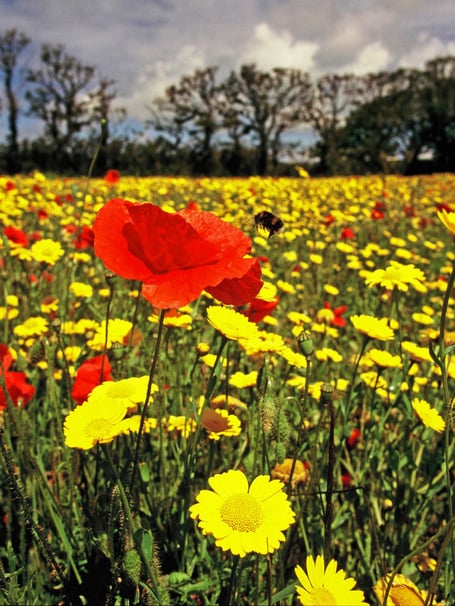
A SIGHT for sore eyes... We live in the most amazing part of the British Isles, the South West of England. I may be biased but I believe Devon to be very special, writes Andrew Cooper in his latest Nature Diary.
No other county has given its name to an entire period in our planet’s life. The Devonian period spanned over 60 million years, starting some 420 million years ago.
It was named after our county because this is where the first rocks from that time were first studied. A period known as the age of fishes.
Although I would not like to have met any fish from that time.


Armour plated, giant teeth and monstrous size, more like a scene from a horror movie.
Today Devon is thankfully a more peaceful place with spectacular nature.
Where else can you find Dartford Warblers flitting across flowering gorse, a Nightjar churring at dusk, or a Barn Owl haunting a meadow all within a few miles. Such scenes are still to be found, although not as common as they once were.
Glow Worms can also occasionally be found lighting a quiet lane, while bats loop overhead and even an elusive otter spied.
Devon has two very different coasts, two exceptional National Parks and two peaks officially classed as mountains.
Where else can you find wild sub-arctic plants growing just thirty miles from sub-tropical flowers? In Devon you can.
With an area of some 80 square miles our county is one of the largest in Britain, with a diverse flora to match.
Close to 2,500 different species of plants, making us one of the botanically richest in the entire country.
There is a veritable army of volunteer people and highly professional organisations who care about our wildlife, collect discarded plastic and campaign to clean our countryside and coast of noxious chemicals and pollutants.
Without them our world would be a much poorer place.
I have thousands of photographs taken over many years filming for my BBC documentaries in the South West, but some images really stand out. Probably for the wrong reasons.
One of my favourite pictures was actually taken in an old daffodil field on the Isles of Scilly.
It is in truth a full of weeds. But talking and interviewing so many farmers and land managers over the years, I learnt of a time when colourful plants such as these were not such a rare sight, even for our grandparents.
Not weeds but flowers that feed the wild food chain, vital for so many insects once seen across the county. Sadly, such a glorious display is now only a vestige of old England.
A real sight for sore eyes in summer, especially if suffering from hay fever!
Comments
This article has no comments yet. Be the first to leave a comment.