

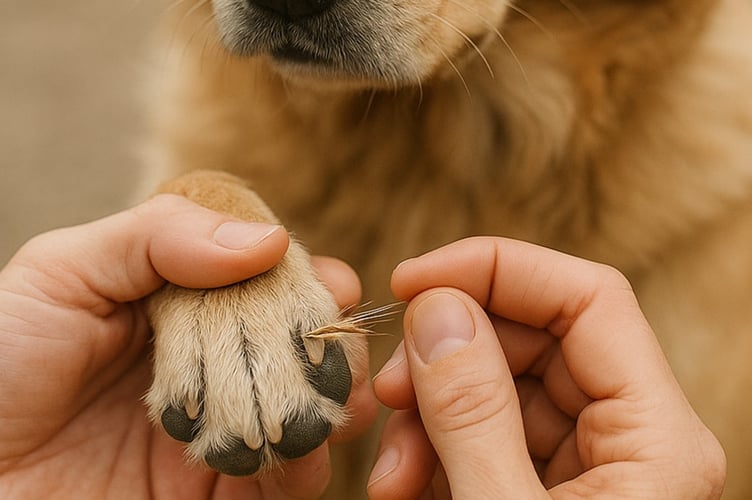
A NEWTON Abbot vet is warning about the potential dangers of grass seeds to pets.
As temperatures rise, pet owners should be aware of this hidden seasonal hazard.
While they may appear harmless, these small, dart-shaped seeds can pose a serious risk to animal health if left unchecked.
Often overlooked due to their size, grass seeds are sharp, dart-shaped and highly mobile.




Once attached to a pet’s fur, they can burrow into the body, penetrating delicate areas such as the ears, eyes, paws, and even beneath the skin.
Left untreated, they can cause intense pain, infection, and more serious complications requiring veterinary intervention, and in some cases, can result in surgery needed.
Dr Lennon Foo of Amity Vet Care explained: ‘These signs may seem minor at first but grass seeds can travel quickly beneath the skin, making early detection absolutely critical.’
Pet owners are encouraged to stay vigilant and look out for the following symptoms, particularly after walks.
These include persistent licking or chewing, especially around the paws; frequent head shaking or scratching at the ears; redness, swelling, or signs of limping; sneezing or unusual nasal discharge and sudden discomfort or agitation following outdoor activity
Simple precautions can greatly reduce the risk of grass seed injuries.
Thoroughly check pets after every walk, paying close attention to paws, ears, and between the toes and keep fur trimmed around the feet and ears.
Choose well-maintained walking paths wherever possible and avoid areas with long, dry grass, particularly during peak season.
Crucially, grass seeds do not break down and will not “work their way out.”
In most cases, professional veterinary removal is required—and delays can lead to more invasive procedures.
Early detection can prevent complications and ensure a quicker recovery.
Prompt care can make all the difference in keeping pets healthy, comfortable, and enjoying the outdoors safely.
Comments
We've recently changed our login process. If you have an account for commenting, you will need to re-register on the login window.
This article has no comments yet. Be the first to leave a comment.