

YOU’VE unwrapped gifts, eaten that ‘one-too-many’ mince pie, and finally got the gadgets set up that you brought for Christmas.
But now thoughts need to turn to restoring some order after the crescendo of the Christmas season is over.
And it isn’t just about identifying which wrapping paper you can or can’t recycle.
Because everyone wants to be generous at Christmas, there are many types of ‘waste’ that inevitably emerge, but with the right approach, can avoid just being dumped in the bin.




Sometimes an element of creativity is needed, but there are also options of how things can be re-used or repurposed that many might not have considered.
Does that go in the recycling?
Most households will inevitably have that moment where everyone tries to decide which wrapping paper you can recycle.
Liz Jarvis, a senior waste manager at Devon County Council, said if it’s plastic covered or shimmering with glitter, then it’s probably destined for the black bin liner, but standard paper-based wrapping paper can be recycled, and this is increasingly paper that boasts the logo of organisations such as the Forestry Commission.
The same approach needs to be taken with Christmas cards too; the more elaborate, plastic, or shiny they are, then they probably can’t be recycled. But, they could be re-used if kept and cut-up later into gift tags for next year.
If you find more of your wrapping paper and cards going in the bin than being recycled, then perhaps keep an eye out for January bargains of paper wrapping paper and less elaborate cards.
Or Ms Jarvis states, consider e-cards next year – Recycle Devon provides links to a range of charities that offer e-cards, meaning you can reduce your waste while also supporting a good cause.
Eyes bigger than your stomach
Food is usually a central part of most celebrations and Christmas is no different.
But with huge amounts of seasonal treats on offer, it’s common for households to buy more than they need.
Ms Jarvis suggests a range of approaches when it comes to leftovers and food in general.
“There are lots of things you can do with food to help you wallet,” she said.
“Firstly, make great friends with your freezer. We all over-do it at Christmas as we want to be generous but we can tend to overbuy.
“As such, if you think you’ve bought something you don’t really need, then don’t forget that it can most likely be frozen and used another day.”
Ms Jarvis said many people were surprised at the number of things you could freeze, such as cheese or mince pies, and so urged people to check what can be frozen if it won’t be used over the Christmas period.
“The key, of course, is to have a good sort out of your freezer before you put lots more things in there so you know exactly what you’ve got,” she said.
“But freezers are great, and if anyone is planning on hosting friends and family during the festive period, then don’t forget that recipes can often be made in advance and frozen to make preparation on the day easier and less stressful.”
Ms Jarvis said food was a “number one nemesis” in terms of waste, with a 2022 analysis showing roughly a third of black bin waste was food – some of which no doubt could have been made into another recipe or possibly frozen.
Those with gardens can also make use of their compost heap – or use Christmas as a time to start one – and those without outside space are urged to use the council’s grey food recycling bins, as the contents of those go to the energy from waste plant.
In with the new but not out with the old
Many of us love a new gadget at Christmas, or some form of electrical appliance.
But Ms Jarvis said that far too often, this influx of new items leads households to jettison existing ones into the rubbish.
People are being urged, however, to think about how these items may be able to be given a new lease of life – even if they’re broken.
Ms Jarvis highlighted the “lovely growing trend of our wonderful repair cafes”, which are local hubs essentially emulating the ethos behind the much-loved TV show, The Repair Shop.
A rising number of locations around Devon now host repair cafes, where items can be taken in to be fixed by a range of experts.
“If you have an item on the blink – even something like old Christmas lights – don’t throw them away,” said Ms Jarvis.
“Take them to a repair cafe and get them fixed for free or for a donation if you can. That goes for electricals but so many other items too.”
Ms Jarvis said getting a broken item repaired means that the household can use it again, potentially sell it to recoup money spent at Christmas on new items, or even donate it to a charity.
It can also be worth taking items that either just aren’t wanted any more or only need minor repairs to one of Devon’s recycling centres.
That’s because recycling centres usually also host a resale shop, where items brought there are resold.
If an item is genuinely beyond repair, Ms Jarvis stressed the importance of recycling electricals and not simply putting them in the black bin bag.
“If you have something like a laptop or mobile phone that is broken and beyond repaid, make sure you take it to your local recycling centre (or visit www.recycleyourelectricals.org.uk) to ensure it is disposed of properly.
Putting batteries in refuse waste can be extremely dangerous, and even Devon and Somerset Fire and Rescue Service is running a campaign to encourage the proper disposal of batteries given a rising number of fires linked to them.
“With electricals, if they have a battery, definitely take it out before discarding the item, or take the whole thing to a recycling centre if removal isn’t possible,” Ms Jarvis added.
For tree’s a jolly good fellow
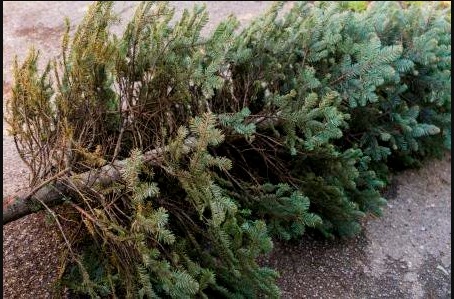
With the festive season ebbing away, it soon becomes time to tackle the ergonomic challenge of evicting the Christmas tree.
Once you’ve derobed it of all the decorations, there are some options at hand.
For those with a garden, it can be kept outside so you get further enjoyment out of it.
“We keep our tree in the garden for as long as possible,” said Ms Jarvis.
“The longest time we’ve had it there is until May, and we usually put bird food in it and they love it.”
Once you’re ready to say goodbye, it can then be chopped up and put in your garden recycling (for those with that service) or even put on the compost heap.
“Keen gardeners will know pine needles don’t compost that well, but they will eventually,” Ms Jarvis added.
Some councils also offer Christmas tree collections, with these being put into a large-scale composter.
Certain size and trunk/branch width restrictions tend to apply for collections, so it’s worth checking your council’s website before wrestling it out onto the street and realising it’s going to stay there.
Alternatively, if your tree is too big – usually those above 6ft tall – then it can also be taken to your local recycling centre.
For more information on what your council recycles, visit the Recycle Devon website: Christmas Recycling Collections – Recycle Devon.
Comments
This article has no comments yet. Be the first to leave a comment.