

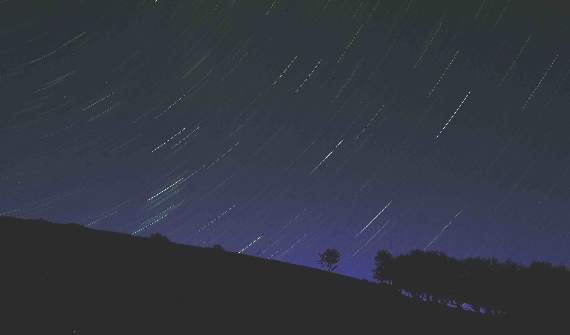
People in Devon are being urged to take part in an annual Star Count from this weekend to record our view of the night sky.
CPRE, the countryside charity, is working with the British Astronomical Association’s Commission for Dark Skies to find indications of light pollution levels across the country.
Star Count is an annual citizen science project from CPRE, the countryside charity and the British Astronomical Association. From February 6 to 14, the public are asked to look heavenwards during a clear night and count how many stars within Orion they can spot.
By counting the number of stars they see in the Orion constellation, citizen scientists will help map the best and worst places in England to enjoy a star-filled night sky.
-across.png?width=209&height=140&crop=209:145,smart&quality=75)
The results will be compared with 2020’s findings, gathered before coronavirus restrictions took hold, which revealed that 61% of participants live with severe light pollution.
Many studies found changes in other types of pollution during lockdown compared to before, but until now, few have focused on the often overlooked, but hugely important, problem of light pollution.
Light pollution means many people only experience a limited view of the night sky, and it also disrupts wildlife’s natural patterns.
By showing where views are most affected by light pollution, CPRE can use this evidence in crucial lobbying efforts to protect and enhance the nation’s dark skies, improving our health, wellbeing, wildlife and the environment.
Crispin Truman, chief executive of CPRE, the countryside charity, said: ‘A starry night sky is one of the most magical sights the countryside can offer, connecting us to the nature we all love and the wonders of the wider universe. Dark skies are also crucial for our health and for that of wildlife. Lockdown and the coronavirus have reminded us about how good for us the countryside can be.
‘But many places suffer from light pollution, bleaching out the night sky. We want to change this. By taking part in Star Count, people will be helping us to lobby the government for more protection of this too often overlooked, but vital, part of our countryside’.
Bob Mizon, UK coordinator, British Astronomical Association’s Commission for Dark Skies, said: ‘Turning back the tide of light pollution brings darker night skies and improvements to the well-being of humans, wildlife and the environment. In its three decades of working with the CPRE towards these goals, we have seen increased public and Parliamentary awareness of the importance of our view of the universe above.
‘The CPRE Star Count is an important part of this work, especially in these abnormal times when we have a chance to see whether changes in our activities are having any positive effect on the atmosphere and our view of the night sky.’
Results from Star Count will help make a map of where star-spotters are enjoying deep, dark skies and where people’s views are affected by light pollution. By showing on a map where light pollution is most serious, we can work nationally and with local councils and others to decide what to do about it.
For more information, go to: www.cpre.org.uk/starcount
Comments
This article has no comments yet. Be the first to leave a comment.