
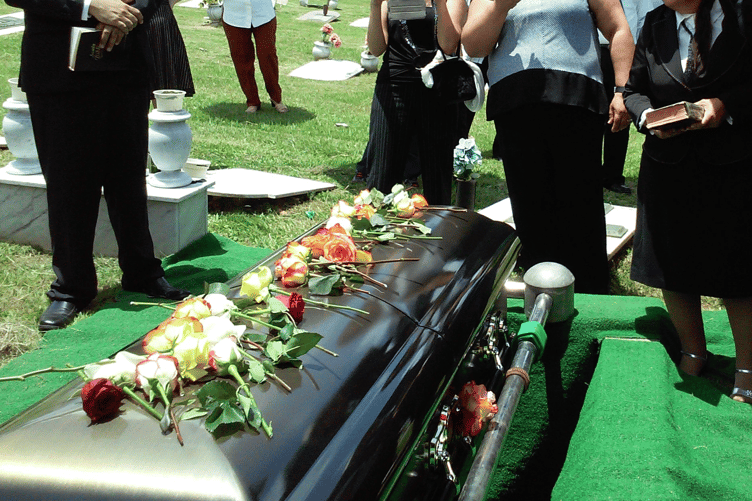
THE number of ‘silent’ or public health funerals taking place across Devon and Cornwall has risen over the past three years, figures from local councils show.
Last year, there was a ‘silent’ funeral somewhere in Devon or Cornwall the equivalent of every working day and around four a week in the previous three years.
Research undertaken by Devon Celebrants, who provide non-religious funeral and other ceremonies, show 918 ‘silent’ funerals have been arranged by councils in the two counties since April 2019.
In the last financial year, there were 278 public health funerals across Devon and Cornwall, compared to 211 the year before, 193 in 2021-21 and 200 in 2019-20.
 South West records highest uptake of whooping cough vaccine during pregnancy
 One in 20 adults in Devon are lonely
 Tens of thousands of ultra low emission vehicles registered in Devon – as campaigners group call for more equal access across UK
 Kate Bush tribute to 'dear friend' lost in Devon Christmas Day swim
Between April and August this year, there have been at least 36 public health funerals, say Devon Celebrants, with some councils still to publish their information.
“Silent funerals are arranged by councils for people who have died without someone to organise it for them or do not have the funds to pay for it. Consequently, there is unlikely to be a service or ceremony,” said Alan Connett of Devon Celebrants.
“Councils have a duty under public health legislation to ensure a dignified funeral and will arrange for a cremation unless instructions are found indicating the person wished to be buried.
Where councils arrange ‘silent’ funerals they will first look for family members who may wish to make the funeral arrangements. When arranging a ‘silent’ funeral, councils will also seek to recover the costs from the person’s estate, wherever possible.
Mr Connett added: “It is sometimes the case that families have grown apart and lost contact. Councils will do what they can to trace relatives and give them the opportunity to arrange the funeral. However, that is not always possible or, occasionally, the relative may not be able to take on that responsibility for a variety of reasons.
“I would advise everyone, whatever their circumstances, to write down their funeral wishes, especially whether they wish to be cremated or buried, and keep that somewhere safe, but easy to find when the time comes.
“Across Devon and Cornwall we’re seeing more cases where local councils have to step-in and make arrangements to the point where there is now a ‘silent’ funeral nearly every working day somewhere in the two counties.
Council staff have the difficult task of sorting through the personal effects and paperwork to look for any information, which will guide them on contacting family or friends and, of course, the person’s final wishes” said Mr Connett.
Comments
This article has no comments yet. Be the first to leave a comment.