


WITH the arrival of the forecast cold spell, Devon County Council reports its gritting teams are out in force treating roads on Devon's primary, secondary and precautionary salting routes.
The remainder of this week is set to be the coldest of this winter so far, with the The Met Office issuing a yellow weather warning in the north of the county for the possibility of icy patches, particularly on untreated surfaces, and there is the risk of wintry showers on higher ground.
And with road temperatures across the county expected to drop below zero, any water run-off from adjacent land could freeze and lead to icy patches, especially on untreated roads.
A council spokesperson said: ‘We aim to help road users travel safely around the county, especially in winter.
 Tens of thousands of ultra low emission vehicles registered in Devon – as campaigners group call for more equal access across UKThousands of ultra low emission vehicles registered in Teignbridge – as campaigners group call for more equal access across UK
 Kate Bush tribute to 'dear friend' lost in Devon Christmas Day swim
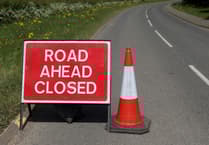 Road closures: two for Teignbridge drivers over the next fortnight
‘Gritting depots across the county are fully stocked with around 24,000 tonnes of salt ready for our fleet of 37 frontline gritters.
‘The decision to call our gritters into action is based on road temperatures, not air temperatures, and our Network Operations Control Centre (NOCC), which runs 24 hours a day, 365 days a year, is fully equipped to monitor the effects of winter weather on our roads.
‘Radar and satellite images are used to track rain and cloud cover across the county, and we have close links with our specialised weather forecasters.
‘The systems at the control centre also link to our network of 38 roadside ice detectors, at strategic locations across the county, that provide live information that helps us predict when ice and snow may occur.
‘This means that we can quickly identify and treat major roads on our salting routes that are freezing and direct gritters to the worst affected areas.
‘We can't salt all roads in Devon as this would be an enormous and costly task.
‘Motorway and trunk roads are the responsibility of National Highways, so we don't salt those either.
‘But we do salt the 2,650 kilometres (1,650 miles) of major routes where the majority of vehicles travel, as well as access points to emergency services such as hospitals and fire stations, railways, airports and secondary schools.
‘This is known as our primary salting network, and covers 20 per cent of Devon's roads.
‘We are also continuing a trial to treat some of Exeter’s busiest cycle routes to help people to use active travel all year round.’
Details of salting routes can be found on the website at
https://www.devon.gov.uk/roadsandtransport/document/winter-service-and-emergency-plan/#2-5-primary-salting-network-psn-map?