
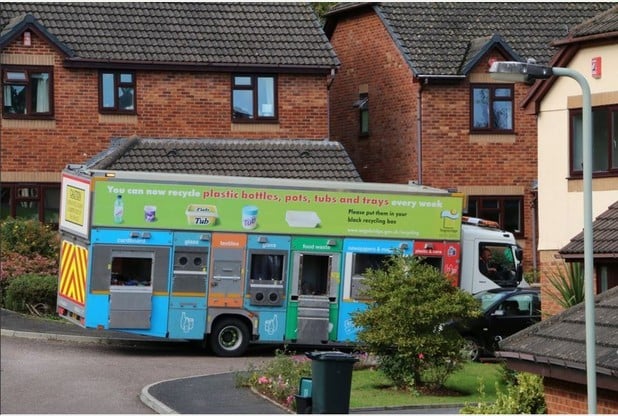
HALTING a scheme to recycle batteries in household rubbish might not make life any safer for Teignbridge waste collectors, councillors have been warned.
The local authority has voted to stop collecting spent batteries as part of its recycling service after hearing how the power cells had caused a number of fires.
Batteries have caused eight fires in the council’s bin lorries and at its waste transfer station in recent years, three of them requiring a visit from the fire brigade.
Members of the council’s overview and scrutiny committee voted to stop collecting flat batteries after hearing that they were among a small number nationwide still doing it.



The meeting heard that batteries accounted for one hundredth of one per cent of the council’s overall recycling.
Crews often find it difficult to spot batteries among other waste, meaning they often end up travelling through the recycling machinery, increasing the risk of more fires.
The report goes on: ‘While the fires were contained, the potential consequences could have been devastating, creating risk to life and significant disruption to waste collection services.’
The council’s waste management officer Chris Braines said batteries mixed in with other waste materials could cause issues both on lorries and at the waste transfer station.
‘We are not obliged to collect them,’ he said.
‘It’s a question of risk versus reward, and it’s a massive risk.’
Most major supermarkets had battery collection points, the meeting heard, but Cllr Phil Bullivant (Con, Bradley) said it was important that the council monitored what happened to the district’s spent batteries for safety’s sake.
‘I’m worried that we are going to see a lot of batteries ending up in people’s black bins,’ he said.
‘Fires could still be an issue.’
The council is also making some changes to comply with the government’s ‘Simpler Recycling’ reforms aimed at standardising services across the country.
Teignbridge already meets most of the government’s requirements, but needs to add cartons to its kerbside collections by March this year, and plastic bags and wrapping by March 2027.
It will cost £185,000 in its first setup year and £64,000 in its second.
Comments
This article has no comments yet. Be the first to leave a comment.