


WITH a background in policy making and a passion for the place he grew up, Dartmoor National Park Authority’ s new chief executive Tom Surrey seems a perfect match for the role he has stepped into.
Mr Surrey joined the team a few weeks ago following the retirement of Dr Kevin Bishop after 18 years at the helm.
Both men called the role “their dream job”.
“It’s a cliche but it’s the absolute truth,” said the new CEO, who has come from a 23-year career in the civil service including working in the office of the late John Prescott when he was Labour’s deputy prime minister under Tony Blair.

“My belief as a policy maker is very much routed in the power of devolution – the more control and influence you can give to places, people and communities the better and this is a great opportunity to do that.
“And Dartmoor is an incredibly special place to me, probably the most special place. It’s the place I grew up and a lot of my family still live here. This really was too good an opportunity to miss.”
Mr Surrey’s previous roles include running national parks and forestry within the Department of the Environment, Food and Rural Affairs (Defra). He refers to that as his favourite years within the civil service.
But managing the finances on DNPA following years of funding cuts will be no easy task.
“I know it has been difficult and it is still very early days for me.” he said. “Dartmoor has had its funding cut by 50 per cent in real terms over the last ten years. Things do look slightly better this year with some additional funding which is fantastic but it is still not enough so it’s beholden on us to manage it really astutely and soundly.
“As a park authority we need to really think about revenue raising as well as spending and invest in ways that see us generate a bit more revenue to complement the excellent work we do attracting project funding.”
He said tough decisions had had to be made in the past and that would continue but he would be capitalising on the award-winning visitor centres and the opportunities they presented and did not rule out bringing in more money from car parking in the future although it was not currently in the planning.
“Where we charge we invest it back into our facilities anyway. The revenue needs to be there to maintain facilities,” he said.
The decision to close Princetown Visitor Centre last October at the Old Duchy Hotel to cut costs to the authority was a blow to the area.
Frustrated local residents had been given a six month reprieve to come up with a sound business plan to prevent closure after they said it was key to the village’s economy but it never transpired.
Mr Surrey said the authority was keen to help Princetown thrive and work with partners to do this and said there was a “live conversation” with the Duchy of Cornwall regarding a future facility in the village.
He applauded the park authority for its legal efforts to retain wild camping and said he wanted more people to gain access to the moor.
“We are celebrating our 75th anniversary this year. We were founded in 1951 as part of a post war settlement that gave us the NHS and national parks, and I stress the word national
“Dartmoor is critically important to the 34,000 people that live and work here but it’s wonderful that the three million people who visit each year get to experience this place.
“I think it’s also important that we work closely with the communities around us as 80 per cent of our visitors live within an hour of the place and think of Dartmoor as theirs.”
Education was the key to ensure that everyone respected the moor from taking home rubbish and avoiding disposable barbecues which can lead to wild fires.
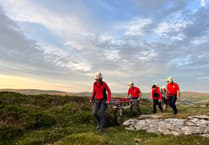
Dartmoor rangers have reported hundreds of scars in the ground from barbecues that they have been repairing over the last year.
“A little bit of thoughtfulness from visitors makes a lot of difference,” said the new chief who is keen to promote more of Dartmoor’s great success stories.
“Dartmoor is an amazing landscape, and has so much going for it with its nature, farming businesses, the incredible archeology – some of the most amazing Bronze Age archeology in the world.
“Our rangers are out there 364 days of the year telling people people why the rules matter, we are doing all we can to make sure Dartmoor is there for the next 75 years.”
Over the coming months and years the public will hear more about the biodiversity – the flora and fauna – that makes Dartmoor so special.
“We have boosted the curlew numbers and reintroduced pine martins, these are real success stories but people maybe do not know so much about the lichens and the beatles and other things that are not so well noticed but critically important,” added the new chief.
Mr Surrey praised the work of his predecessor and the park authority for making the moor more accessible with the ‘Miles without Stiles’ initiative, creating 20 accessible routes without stiles.
And he said Dartmoor Preservation made small loans available to buy walking boots and other equipment so people could participate in Ten Tors, the largest free youth participation event in the country.
He said he would like to see events like this and the junior Ranger Ralph scheme inspire others to strive to become DNPA chief executives of the future.
There are currently three major landscape recovery plans for Dartmoor which Mr Surrey said he hoped would have clear benefits for landscape management for nature and farming.
Controversially these include the possible reduction in livestock numbers but these 20 year plans are in early discussions at the moment, he added.
“I don’t think anyone could say that the land has not changed over time, “ he said, “and of course we have one massive issue which needs to be addressed which is the impact of climate change.”
The new chief executive said fundamentally he believed in partnership: “Our Partnership Plan is not just about what we do but what we do collectively with landowners, farmers, the recreation community …
“I want to give as much voice to our local people and local communities as we can.”
The new Dartmoor Partnership Plan is due to go through a public consultation process this summer.
Comments
We've recently changed our login process. If you have an account for commenting, you will need to re-register on the login window.
This article has no comments yet. Be the first to leave a comment.