

An orchid count at Pudsham Meadows has shown a continuing increase in all four of the species growing there, indicating successful land management by the Dartmoor Preservation Association (DPA).
The four hay meadows between Widecombe and Cold-East Cross are owned by the DPA and are recognised as a County Wildlife Site, rich in wildflowers, bees, butterflies and other insects.
The site is carefully managed to support biodiversity while maintaining the conditions that allow vulnerable species such as orchids to flourish.
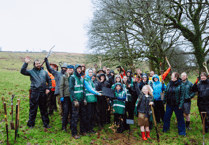
The annual orchid count was carried out last month by volunteers from DPA Conservation and the Devon Wildlife Trust.
They counted a total of 3,222 orchid plants – an increase of 902 from 2025, which had also seen a rise of 299 compared to the previous year.
The most plentiful species found this year was the Southern Marsh orchid, with 1,376 recorded. This is one of the commonest types in southern Britain, but has declined in recent decades because of changing agricultural practices and the loss of damp marsh habitats.

Heath Spotted orchids were the next most plentiful, with 916 being counted – up from 586 in 2025. This species relies on the presence of specific fungi in the soil to germinate, and it can take years for careful land management practices to produce an increase in flowering plants. The DPA said the slow spreading nature of orchids is one of reasons why yearly surveying and recording of plants and their locations is so important.

Numbers of the Greater Butterfly Orchid also showed an increase, with 563 plants recorded this year in comparison to 481 in 2025. These orchids specialise in night-time pollination, producing a pleasant scent in the evening which attracts pollinating moths.
The biggest proportional increase in numbers was recorded for the Twayblade orchid. This type can be difficult to see among grasses and bracken, as it has up to 100 greenish-white flowers clustered on a stem. This year the volunteers counted 317 plants, compared to just 90 in 2025.
They also noted that all four of the orchid species at the meadows looked more compact and slender than they had on previous years. This may have been due to uncharacteristically dry early spring weather, or it may be down to the fact that many orchids were young plants, counted for the first time this year.
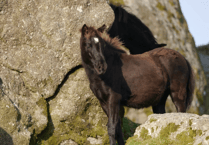
The Dartmoor Preservation Association works hard all year round to maintain the health and biodiversity of Pudsham Meadows. This includes bracken management to protect wildflower diversity, conservation grazing with native Dartmoor ponies, and looking after boundaries using traditional methods such as dry-stone walling and hedge laying.
There are also plans to improve the scrub edge of the meadows, with brambles merging into small scrub and up to medium sized native trees, and to make conditions better for butterflies along the moorland edge, with the creation of a pond in a low lying corner area.
Regular monitoring and surveying is another important part of this work, and relies on specialist staff, volunteers, and partnerships with local wildlife groups to track indicator species.
Comments
We've recently changed our login process. If you have an account for commenting, you will need to re-register on the login window.
This article has no comments yet. Be the first to leave a comment.