
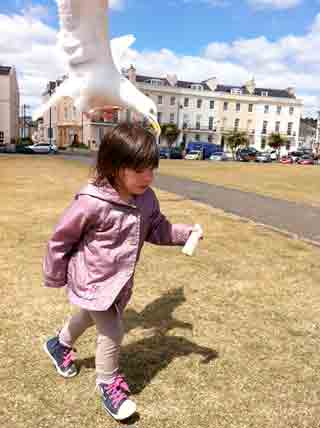
BUSINESSMAN Stephen Proctor is to appear on national television as his company has been inundated with requests for help to combat menacing gulls.
Started eight years ago, Bird Busters specialises in providing deterrents against gulls and pigeons.
Mr Proctor's Teignmouth-based firm installs netting and spikes to stop the birds nesting on roofs and causing havoc and potential injury to residents.
Now he has been filmed for BBC's The One Show, detailing how people can protect their homes and themselves from vicious gulls.


He explained: 'Seagulls are a big problem and I don't think people realise they can do something about it.
'Companies which are licensed can remove nests if they are causing a health and safety hazard and for public protection.'
He said: 'Seagulls can be dangerous and because they are a protected species, people think they are expected to put up with being attacked.'
Several schools in the area use his services to protect pupils including one primary school which was unable to let the children play or have their lunch outside as the gulls which were nesting on the roof swooped down.
Mr Proctor was filmed working on a property in Shaldon and talked about how people can protect their property to stop the gulls nesting.
While working, Mr Proctor is often swooped on by the birds and protects himself by sticking a broom handle or similar object above his head.
Feeding gulls increases the problem, as the birds then learn to swoop on people eating outside to feed.
He explained: 'People encourage them by feeding them so they swoop to take food out of their hands but it only takes one step further for someone to get hurt.'
Anyone removing a nest without a licence can face a fine of up to £5,000 or six months in prison.
The gulls are protected because their numbers are low, with the herring gull population declining by about 50 per cent in the last 40 years.
However, numbers are increasing in resorts and inland towns where food is more easily available.
RSPB experts say the answer is not to feed them, make sure food waste is put out for collection in strong, sealed bags and to use professional and licenced companies to prevent nesting on roofs and buildings.
Comments
This article has no comments yet. Be the first to leave a comment.