

A Devon-born proto-feminist poet, Lady Mary Chudleigh caused a stir among her contemporaries but then disappeared into obscurity. Reporter Charlotte Meredith investigates Lady Mary’s writings to uncover the woman behind the enigma…
SHE was ahead of her time as an 18th century feminist poet living in the Teign Valley, yet she remains a figure of mystery.
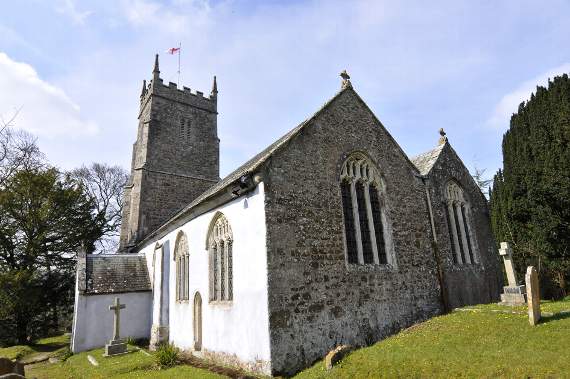
There is no official monument to her, not even over her burial vault in St John the Baptist Church in Ashton.
But in her poetry lies both a thumbnail sketch of an intelligent, reflective and insightful woman and a voice which still strikes a chord with readers today.


.jpeg?width=209&height=140&crop=209:145,smart&quality=75)

Born Mary Lee in Winslade in 1656, she married Sir George Chudleigh in 1674 and moved into Place Barton, his family home in Ashton, where she died in 1710.
In just under a decade Lady Mary Chudleigh wrote and published a body of work which wouldn’t raise an eyebrow in this day and age but would have been handled as potential dynamite by her male peers.
Eighty years would pass before Mary Wollstonecraft upset the apple cart with her arguments for female equality.
Lady Mary wrote about the traditionally ‘feminine’ subject of marriage but her approach to it was far from typical.
She lived an apparently reclusive and ‘solitary’ existence in Devon and showed a worldly knowledge of the expectations and realities of male-female relationships.
For a writer so vocal about gender and marital politics, frustratingly little is known about her relationship with her husband, who was 13 years her senior.
Using her poetry as evidence it is possible her marriage was unhappy. But since her poems remain in existence, implying her husband knew about them, their relationship may have been more cordial than her poems suggest.
Disregarding her personal experience, one of her most famous poems, ‘To The Ladies’, was a small societal explosion:
‘Wife and Servant are the same,
‘But only differ in the name.’
For a woman – a wife – to write this and get it into print struck a nerve at a time when men called the shots and women were expected to obey.
To Lady Mary, total obedience to husbands is simply tyranny on a smaller scale:
‘Him must still serve, him still obey,
‘And nothing act, and nothing say,
‘But what her haughty Lord thinks fit,
‘Who with the Pow’r, has all the Wit.’
She makes a stand for women’s self-respect and independence in the powerful last lines:
‘Value your selves, and Men despise;
‘You must be proud, if you’ll be wise.’
More was to come.
In 1701 Lady Mary wrote her most well-known piece ‘The Ladies Defence,’ linking her views on marriage and relationships to another issue, education for women.
It has been said that for women like Lady Mary ‘the only serious career was marriage’ and intellectual interests were frowned upon as unsuitable for female minds. Obviously Lady Mary did not agree:
‘’Tis hard we should be by the Men despis’d,
‘Yet kept from knowing what wou’d make us priz’d:
‘Debarr’d from Knowledge, banish’d from the Schools,
‘And with the utmost Industry bred Fools.’
Strong words indeed.
Neither was she squeamish about stating where the fault for this lay:
‘If we less Wise and Rational are grown,
‘’Tis owning to your Management alone.’
She was perceptive enough to realise men would prefer women to remain uneducated and keep the balance of power as it was – on their side.
‘You shou’d content your selves with being Fair,’ says one of the male detractors in her poem – a view disturbingly mirrored in today’s image-obsessed culture with its appropriation of women’s bodies.
‘I’d rather Aesop’s ugly Visage wear,
‘Joyn’d with his Mind, then be a Fool, and Fair’ is the female champion’s spirited response. Lady Mary continues to cock a snook at men’s refusal to educate women:
‘But spite of you, we’ll to our selves be kind:
‘Your Censures slight, your little Tricks despise,
‘And make it our whole Business to be wise.’
She followed her own advice. In one of the few letters she left behind she claimed her books and thoughts were her ‘most agreeable Companions.’
Scholar Marilyn L Williamson argued that Lady Mary saw that the system was not going to change while men remained in charge. Instead change would only happen ‘in women’s attitudes towards themselves.’
To Lady Mary, education was the key to changing women’s opinions of themselves. By improving their minds they could avoid adopting ‘the misogynistic images’ held up to them by men.
Her view is 360 years old but even now it contains an undeniable ring of truth.
Lady Mary’s life may have vanished into the mists of time but her words remain as relevant and memorable as when she first penned them.
To let her write her own obituary: ‘I’ve not deserv’d my Fate.’
Comments
This article has no comments yet. Be the first to leave a comment.